
The debate of Robots vs Humans is one of the most interesting topics of this generation. With the rapid rise of Artificial Intelligence, automation, humanoid robots, and advanced machine learning, people now wonder:
Will robots replace humans? Or will humans continue to rule the future?
The answer is not simple. Technology is advancing, but humans still hold unique qualities that machines cannot replicate. In this detailed article, we will explore the truth behind this debate, future predictions, expert opinions, benefits, risks, job impacts, and what the world may look like in the next 20–30 years.
Let’s dive in.
1. Rise of Robots – A New Era
Robots have been around for decades, but 2025 marks a powerful shift. Today we have:
- AI robots that think and learn
- Humanoid robots like Ameca, Optimus, Sophia
- Self-driving cars
- Smart factory robots
- AI doctors, lawyers, and assistants
- Military drones and robots
- Delivery and service robots
These machines are fast, accurate, and do not need food, rest, or sleep. For industries, robots mean:
- Higher efficiency
- Zero human errors
- Lower long-term cost
- 24/7 working ability
Because of this, robots are becoming an essential part of business, medicine, education, customer service, and even entertainment.
2. Strengths of Robots (Why They Are Powerful)
Robots have abilities that make them extremely valuable:
1. Speed & Efficiency
Robots can work 10x faster than humans, process large data instantly, and finish tasks without breaks.
2. Accuracy
Machines do not get tired or emotional. They make fewer mistakes than humans, especially in calculations, surgery, and manufacturing.
3. 24/7 Productivity
No sleep, no salary, no holidays. Robots can work all day and night.
4. Ability to Handle Dangerous Jobs
Robots can go to places where humans cannot survive:
- Space
- Deep ocean
- Nuclear zones
- Disaster sites
5. Cost Saving for Industries
Once built, robots cost less to maintain. For businesses, robots are long-term investments.
These factors make robots extremely powerful in shaping the future.
3. Strengths of Humans (Why Humans Will Still Lead)
Even with all the power of AI and robots, humans have qualities no machine can copy fully:
1. Creativity
Humans create art, music, emotions, theories, inventions, and ideas. Robots only follow instructions.
2. Emotional Intelligence
Humans understand feelings, empathy, relationships, culture, and social behavior. Robots cannot truly “feel”.
3. Critical Thinking
Humans can think beyond code. They imagine futures, solve moral problems, and understand complex life situations.
4. Adaptability
Humans adapt to change, learn new skills, and innovate in unexpected situations.
5. Moral Values
Humans understand right vs wrong, consequences, justice, fairness, and ethics.
Machine intelligence cannot replace human consciousness.
4. Will Robots Take All Human Jobs?
This is the biggest fear.
Research shows:
- Robots will replace routine, repetitive, and physical jobs
- But robots will create new jobs that we never imagined before
Jobs Robots May Replace
- Data entry
- Assembly line work
- Telemarketing
- Cashiers
- Drivers
- Customer support
- Packaging & warehouse tasks
- Security scanning
Jobs Robots Cannot Replace
- Doctors (full replacement unlikely)
- Teachers
- Artists, writers, musicians
- Leaders, managers
- Therapists
- Lawyers (partially automated)
- Scientists, engineers
- Creative professionals
Robots may take many jobs, but humans will always be needed for innovation, leadership, and emotional-based professions.
5. Robots + Humans = The Real Future
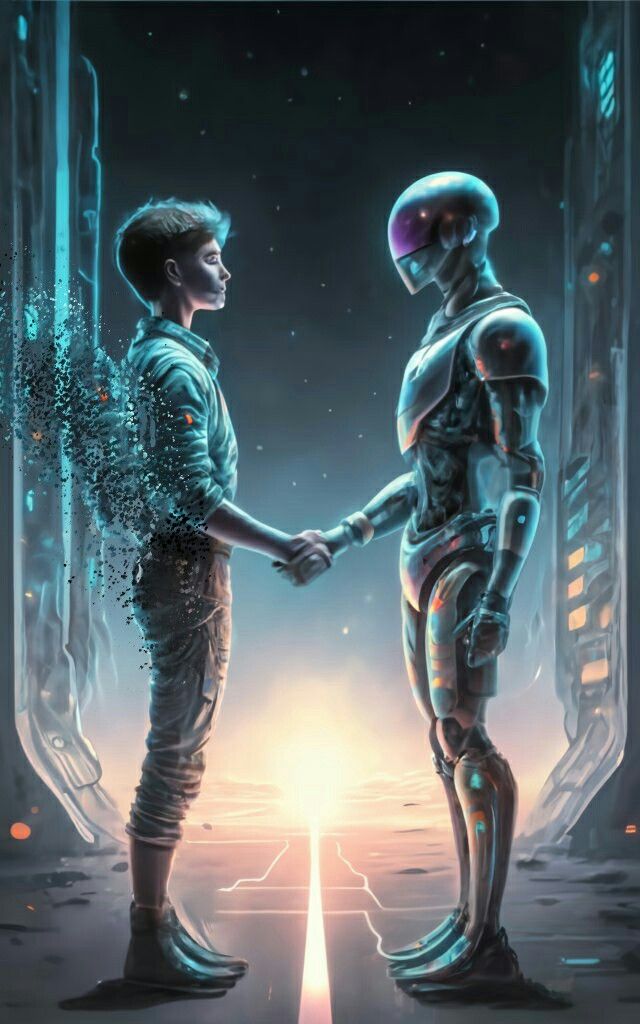
Instead of competition, experts believe the future will be a human–robot partnership.
This means:
Humans will think, plan, and create
while
Robots will execute, automate, and support
Examples:
- Doctors using AI robots for surgery
- Teachers using AI tools for learning personalization
- Engineers using robots for construction
- Offices using AI assistants for efficiency
- Factories using robots for production
This hybrid approach will create a more powerful and productive world.
6. What Makes Robots Dangerous? (The Risks)
Despite advantages, robots carry serious risks if not controlled.
1. Job Loss
Automation may replace millions of jobs worldwide.
2. Privacy Issues
AI systems can track data, behavior, and activities.
3. Loss of Human Skills
People may become overly dependent on machines.
4. Autonomous Weapons
Military robots could be dangerous if misused.
5. AI Misalignment
If AI becomes too advanced, it may act unpredictably.
6. Economic Inequality
Companies using robots may become extremely powerful, leaving others behind.
These dangers mean that the future of robots must be controlled properly.
7. Can Robots Ever Rule Humans?
This is the ultimate question.
Can robots become more intelligent than humans?
Yes, some AI systems already outperform humans in logic, memory, prediction, and learning.
Can robots gain consciousness?
Not yet. There is no evidence that robots can truly “feel” or develop self-awareness.
Can robots take over the world?
Not likely—unless humans create poorly controlled AI systems with no safety measures.
Human laws, ethics, and global regulations will prevent robots from becoming rulers.
8. Who Will Rule the Future? (Final Answer)
The future will NOT be ruled by robots alone.
The future will NOT be ruled by humans alone.
The future will be ruled by humans who use robots.
The smartest people, companies, and nations will be those who learn how to:
- Use AI effectively
- Combine human creativity with machine power
- Build ethical and safe robotics
- Adapt to new technological changes
Humans with AI will be more powerful than humans without AI.
This is the real answer.
9. Future Predictions (2030–2050)
By 2030:
- Most industries will use robots
- Self-driving cars will become common
- AI doctors will assist in major surgeries
- 30–40% routine jobs will be automated
By 2040:
- Advanced humanoid robots in homes
- Fully robotic hospitals, schools, factories
- Smart cities using AI for management
By 2050:
- Humans and robots will work side-by-side
- Brain–AI interfaces may exist
- Robots could become emotional companions
- Humans may live in a fully AI-supported world
Robots will not dominate—they will enhance humanity.
10. How Humans Can Prepare for a Robotic Future
To stay relevant:
✔ Learn AI skills
✔ Improve creativity
✔ Focus on leadership & communication
✔ Adapt to new technologies
✔ Choose careers robots cannot replace
✔ Use AI tools for productivity
The people who adapt will rule the future.
SEO Keywords for This Article
Robots vs humans, future of robots, AI future, automation jobs, robot takeover, human vs machine, AI impact 2025, will robots replace humans, future technology predictions.
FAQs – Robots vs Humans
1. Will robots replace humans completely?
No. Robots will replace some jobs but not human creativity, emotions, or leadership.
2. Are robots smarter than humans?
Robots are faster and more accurate, but humans are more creative and emotionally intelligent.
3. Can robots harm humans in the future?
If controlled poorly, yes. But with global regulations, risks can be minimized.
4. Who will rule the future—robots or humans?
Humans who use robots and AI will rule the future.
5. Will robots take away jobs?
Some jobs will be automated, but new high-tech jobs will also be created.